
'The Invasion of the Barbarians'
The spoils of war and the long wait for justice.

Dear Moviegoers,
There's no mystery to understand or anything amazing about historical drama movies that connect to modern real-life events, since a big piece of what makes cinema potentially incredible is its ability to build mountains and bridge oceans, of place and of time. This is no special feature, but rather a default setting, and it's beautiful. The Invasion of the Barbarians, set in 1939 Spain, certainly makes it easy to connect the dots from their fascism to contemporary fascism, even if in a Lifetime Movie Network kind of way.
Horror is horror, and war breeds it in barrels. The domestic and urban abuse suffered by everyday people, as depicted in this film, as a result of a violent government, is disturbing and all too familiar to anyone with an interest in history and movies about history. These kinds of stories can't be told enough, and deserve at least some patience when viewing. The Invasion of the Barbarians isn't above pulling strings on purpose, attempting to force tears out of even the hardest of men. For a film about ruthless control, resistance, and justice, why is that force necessary?
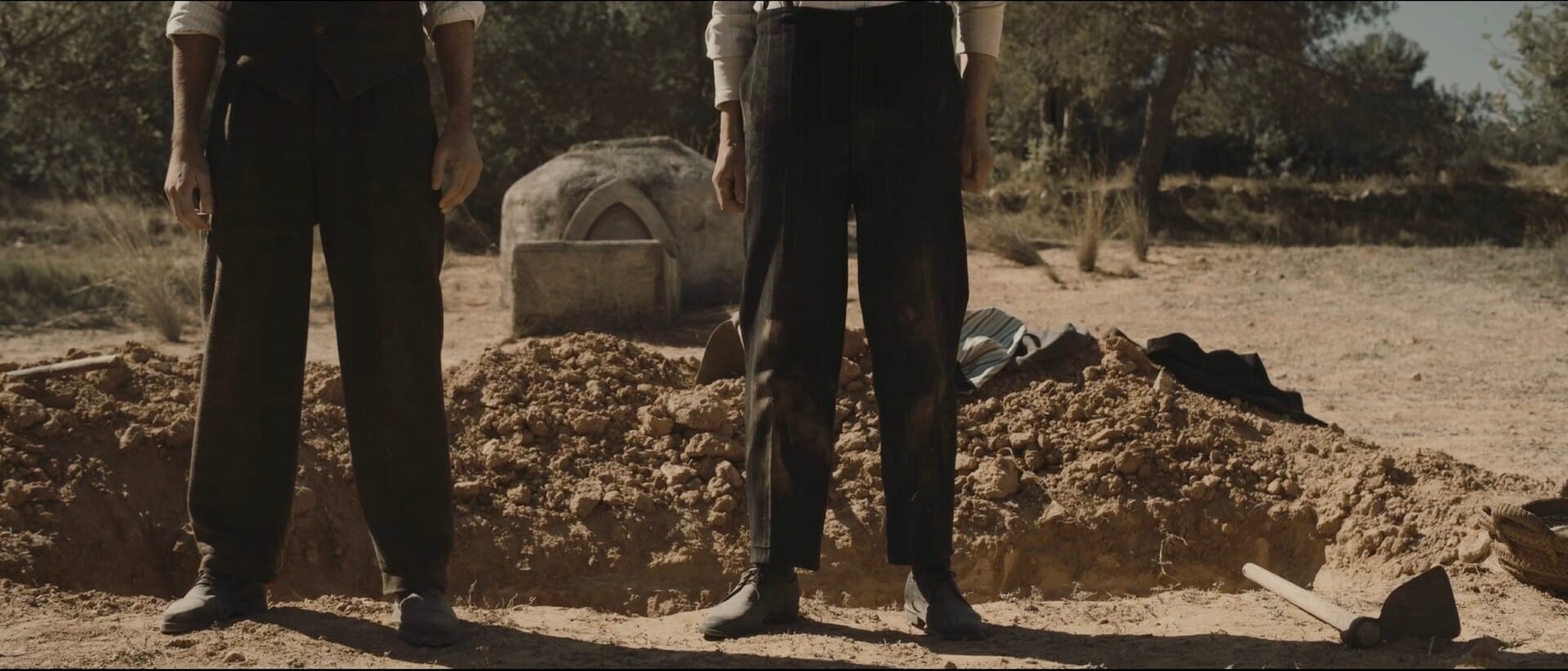
Jumping from 1939 to the current day with discombobulated pacing and confused reasoning, the movie follows a mother trying to protect an important painting from the fascist regime, businesspeople wanting that painting, and descendants reconciling the past with their own present. Such themes of passed-on pain, shame, convenience off the backs of others, and peace for generations prior make The Invasion of the Barbarians chilling and provocative. It's not another "the more things change" tale, expressing more of the capitulation and collaboration of normal people with atrocities in their communities than the atrocities themselves. Bureaucracies. Paperwork. Speeches. Demands. Justifications. All roads lead to one place, and that's a single grave.
What the film does too much is bluntly state its goals. Interrogation scenes flat-out speak as if a conversation over politics is taking place instead of an investigation about a painting. It's not subtle. Miles from it, actually. Actors might as well look into the camera and read thesis statements, and it's like this in almost every moment. History needs not to conduct clubbings when spreading a message; it just needs to be true. That truth can be shown in creative ways, even anachronistic or wish-fulfillment methods will work, but trading dialogue for constant streams of what's happening only hurts in the long run.
I can't say that The Invasion of the Barbarians is disappointing, but maybe I expected something scaled back or grander. There's good use of sets, finely polished production design, and powerful acting here and there, but those masks only provide cover for what could've been. More than crying, more than agreement through tragedy, what does this movie do to those who'll watch?
The watching will be ok though. It deserves that at least. Just think about it. 3/5
The Invasion of the Barbarians will screen and stream (in-person and online) as part of the 2026 SF IndieFest, from 2/5 to 2/15.