
'Barking in the Dark'
Weird is weird. End of story.

Dear Moviegoers,
"Post-modern."
"Post-Mo."
"Weird for the sake of weird."
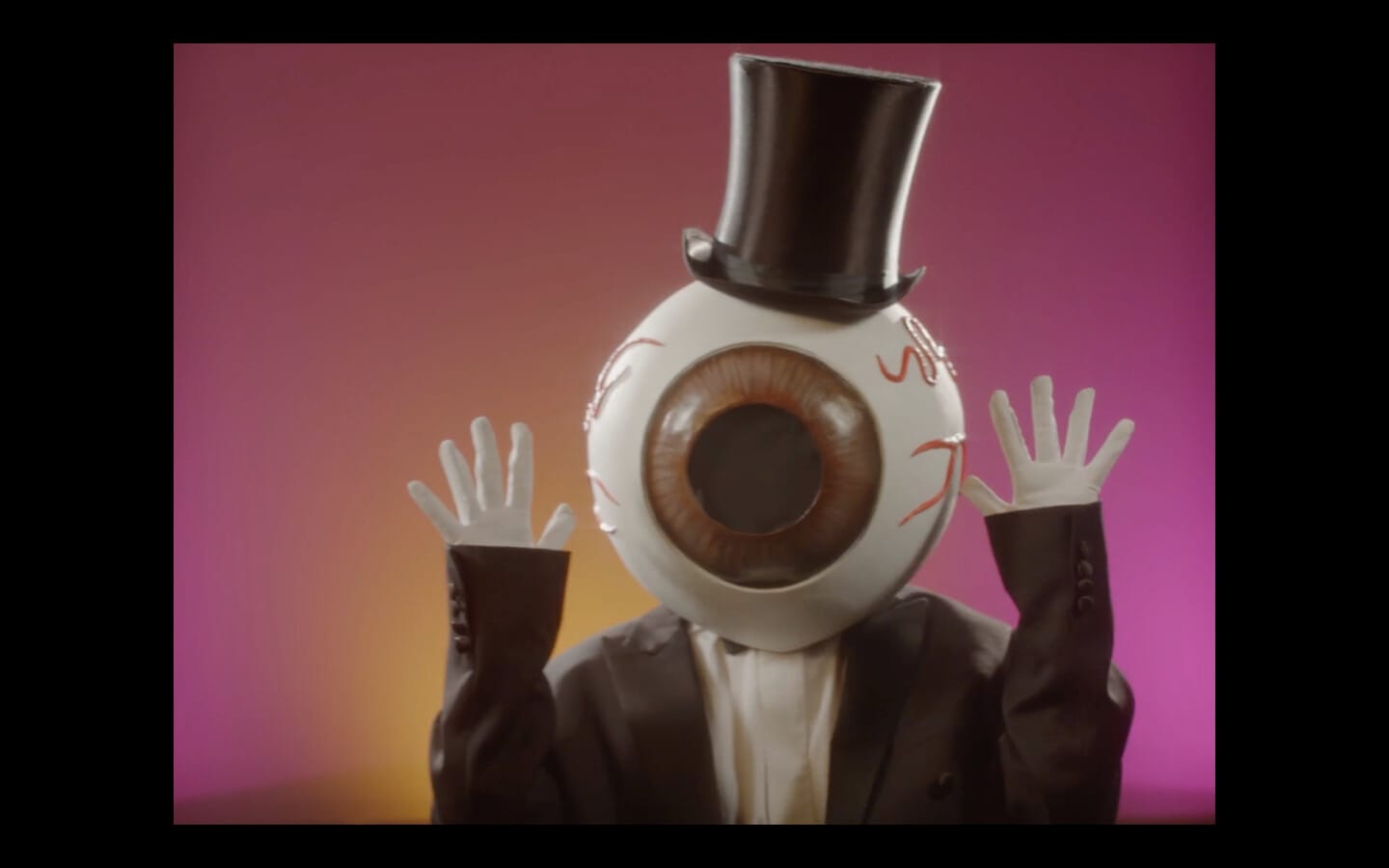
The experimental musicians The Residents, performing across the art spectrum for over fifty years, aren't so much documented in Barking in the Dark as they are looked at. With awe, perhaps. If so, it's too much, at least for a so-called "documentary." The film acts more like a traveling home movie, treating its subject(s) like extended family to be observed as silly and cute.
It's uncertain if any one descriptor can describe this troupe, but Barking in the Dark doesn't bother, and that's just as things should be. The Residents can't be put in a corner, so acting like a single movie could do that would be wrong-headed. This is a challenge of concept, production, and editing, ultimately finding a resolution in a little over forty minutes of duration. What is there to say? What is left to plunder?
The legend and the lore of the group continue to be ambiguous, even when answers are obvious. The main focus of the film is Homer Flynn, the supposed manager of the eyeball-masked performers. He shows off items and props from the storage unit "archives," proud of a promotional package in particular that's a joke in itself and a laugh at the expense of others. Homer is a fine character, representing a hippie spirit that's fading now, but might be needed more than ever. Freak outs for everyone!
Barking in the Dark combines a performance piece with a concert film with an anti-documentary in a way that's confusing but appreciated. Any media about The Residents is exciting by default, and would be difficult to call "bad" by any means. It's short, it's fun, it's odd.
Give it a break. 3/5
Barking in the Dark will screen and stream (in-person and online) as part of the 2026 SF IndieFest, from 2/5 to 2/15.